Saturday, 3 May 2014

Newark Nature Around and About

Feels like I've been barely inside all day, I've been parkrunning, walking and cycling, discarding my jacket and letting the sun hit my skin, taking the edge off the occasional northerly chill in the air. The hedgerows are busy with restless orange tips; small whites and large whites are on the wing and proving to be equally difficult to photograph.

Blooms are shining in the sun, hawthorn blossom is everywhere. I'm allowed to have ice creams in the market square, and listen to Radio 4 plays while on the move - that makes me sound old. I didn't think about work, and enjoyed my tea at Rumbles on the Sconce.

A simple day, but a greatly pleasurable one.


Fly on a buttercup
Sickly red tailed bumblebee
Tree bumblebee on a white bluebell
The perfect buttercup
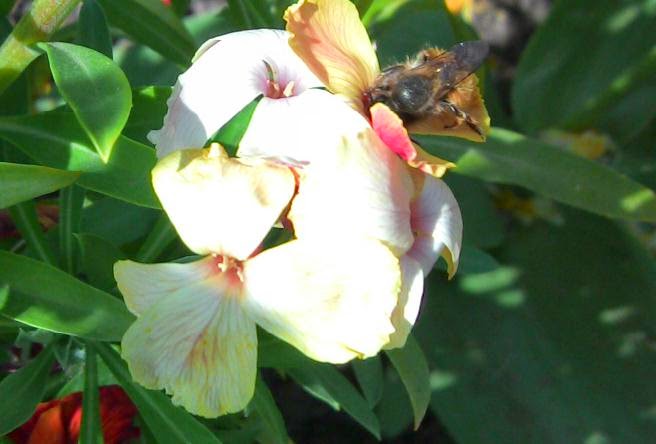
Unknown bee drinking nectar
Twenty plume moth in my kitchen

Friday, 2 May 2014

Orange Tips and Fly Tips

A day of running and cycling kicking off with ten miles on the bike on a bright but cool morning. More and more orange tips are about now, males and females, but no brimstones and not so many peacocks. Then again it isn't warm enough to be great butterfly weather.

I wanted to see what was home on Cotham Flash paddocks, having seen yellow wagtails in the area last week, but the field was entirely empty, and not just because the owner has spread horse manure and sout concrete blocks down, presumably to prevent the sort of fly tipping I saw further down. Considerate fly tippers had stuffed an old caravan full of rubbish before dumping it.

I despise the fly tipping that spoils all my running and cycling routes, I really do.

In the afternoon, I ran the coddington route, saw swallows, but despite craning my neck into various uncomfortable positions, saw none of the swifts that have been reported at Kings Mill Reservoir today. Newly arrived migrants seem to love that lake, it seems like a very rich food source for hungry hirundids and, er, swiftids.

Hopefully they will be screeching over town soon.

Geniune concerns? Or NIMBYs
Cotham church at a distance
Fly tipped caravan
Flying bumblebee at the sconce
Another flighty, flitty orange tip

Tuesday, 29 April 2014

Stargazing – a Dream of Lighthouses


A number of years ago, probably in the torrid times around my 32nd birthday, a friend of mine presented me with a book. The cover was a night-time photograph of a lighthouse, rendered in such a way it looked more like an illustration, and the jacket announced it to be: “Stargazing – Peter Hill”.

I thought the cover was a shade twee, and the liner notes, explaining how a boy became a man on the Scottish Lights in the early 1970s, wasn't too promising either, it smacked too much of beards, tatty pullovers and Capstan Full Strength. Nautical cliches rammed down your throat at Cat'O'Nine Tails point

I can't deny that there is indeed a bit of bearding and pullovering in the book, but this is allowed because it is a work of such magic. Poetry, art, storytelling and manual work are described on these extraordinary creations, many of them built out of sheer impossibility by the Stephenson Dynasty (Robert Louis was a relative) on rocks that often barely saw the light of day at low tide – witness lighthouses like the elegant Skerryvore or the famous Bell Rock Light. Countless lives were saved by the characters who worked on these lights; career men, veterans overshadowed by war, those seeking escape, and a keeper who ritually removed all his clothes for the duration whenever he arrived on a light.

And amongst these men was thrown Peter Hill, an art student looking for something new and different to do for a summer; a place to explore the artistic and literary sides of his personality while working out what to do with his life. We read of him learning the ropes on Pladda, a light off the coast of the holiday isle of Arran much loved by Basking Sharks, and how he worked out how to cook huge meals for four hungry men and light the Light without burning all his hair off.

He then moves to Paddy's Milestone, Ailsa Craig, where he hears tales of war from the elder keepers and explores the giant rock where once upon a time all the granite used in the making of the world's stock of Curling stones came from. He dines off fresh crab and lobster, and swims off rocks the size of houses, sketchbook and notepad constantly at his side.

Finally he moves to Hyskeir, an island he finds is smaller than the dot of the “i” that marks its name in his atlas and is strictly run not by the senior keeper, but by the goats that lived there. His final trial in this summer is to survive two days on half a cigarette. Everything out of his system, he goes back to art school and eventually becomes a well known artist in Australia.

How little I thought of this book, cruelly, when it was given to me, since then I've realised it was a gift of the most stunning mile. It is a book for daydreamers, writers, artists and poets who wish they could spend time alone, undisturbed, yet in the company of fascinating, congenial people. It is a book for those who love the sea, and those landlocked surrounded by sterile arable farmland who wish they had a chance to.

It makes me wish I could have done, or indeed do, the same thing – never mind the clumsiness, the unsociability, the utter poisonous of my cooking, for I would learn, somehow, surely – finished my two year my stint looking after the seafarers of the world, and shining welcoming light across the waters, that the sun had painted gold at sunset a few minutes before.

And then clutching notebooks full of words of purple, silver, silk and barbed wire, I would return home, and set the world alight with words. If only, if only.

Copyright Creamcrackerednature 29.04.14

Monday, 28 April 2014

At Last! Orange Tip Butterflies!

Today I took myself through hawton and along the river, listening to Radio 4 as ever, and wondering what I should see.

I initially started in Devon Pastures, and tried to photograph the green veined and small whites that were fluttering about by the pond - the riverside plants that the common blues and small coppers like aren't in bloom yet. As ever, whites of any kind are tricky to photograph, being very very twitchy and flighty, but I got a shot in the end.

I headed out into Hawton, and here was delighted to have my first close up view of an orange tip butterfly all year. I've been wondering where they are, perhaps forgetting to consider that although it feels like it has been spring for a good 6 weeks or more now, it's still early in the year.

Certainly last year, spring had only been going for a week by this time.

It may be they needed warmer temperatures, because in today's decent weather, there were a fair few about in their fabourite hedgerow habitat. And finally, I got to photograph one, something I've been failing to do for years.

Across to Farndon, and the wild garlic flowers are starting to emerge spikily in Willow Holt; soon the area of the holt next to the river will be white with them. Again lots of white butterflies around here, and like the bumblebees, they seem to prefer the flowering nettles as a source of food.

On the river itself, there wasn't a lot to be seen, but there were many herons out fishing, stabbing beaks poised motionless above the water, awaiting whatever migh be unwary beneath the water.

A weak sun began to lower in the west, but it had still been a better day than there's been for a little while.

Marsh marigold, devon pasture
Lesser celandine, Devon Pasture
Male small white, first flight, Devon Pasture
Unknown, above the A46 bypass
Orange  tip male, near entrance to Willow Holt
Wild garlic floweers, Willow Holt

Saturday, 26 April 2014

Relief to be Outside in Nature

I've not been caring what I've been looking at. Just glad to get out full stop. In the cemtery, life evolves again. Now the hyacinths are over, and wood anemone and buttercup have emerged to join the beautiful bluebell-scapes.

I don't know if they are spanish or native, they are still beautiful.

Wood anemone
Wood anemone newcomers in front of bluebells
Refreshed buttercups
Bluebells en regalia
Hoverfly on dandelion

Friday, 18 April 2014

All the Bees in the World

Unlike birds, bees and bumblebees are a far better photo opp for the cash strapped naturalist with only a mobile phone camera. Some bees are obliging, and will happily sit on a flower for a while allowing themselves to be photgraphed from all angles, while others are nervous, sensitive to human presence and barely settle for a second.

As with butterflies, the trick is to get as close as you can, as quietly as you can, and don't let your shadow fall on the insect, that seems to scare them more than anything. But, be prepared to be frustrated. A lot.

I'm no expert in identifying bumblebees, but I think the dark bee below may be a field cuckoo bumblebee male, which is a more uncommon specimen of these big buzzers!

First up, a honey bee of some kind
Field cuckoo bumblebee, male, I think
Magnficent garden bumblebee queen
Her Majesty
Tree bumblebee
Fabulous detail in this garden bumblebee shot

Thursday, 17 April 2014

The Feisty Thrushes of Kings Mill Hospital

It is strange where animals set up home.

Hospitals are not places anyone would ever want to be, despite the efforts of the staff, and my mum has been suffering a while there now, watching the other patients come and go. We have tried to keep her spirits up, but it's hard.

Luckily, we found distractions today, in the shape of a pair of birds who have found a hospital a grand place to live.

I had already had an enlivening afternoon, because the hirundids have arrived in earnest on the water at Sutton in Ashfield reservoir. At the hospital end, the black silhouette of swallows are carving up the air into strips of molecule thickness, their powerful flight easy to admire.

But at the sailing club, it is the antics of the small, more fluttery, sand martins that really thrill. Standing on the slipway, they flash by in chains of two or three at water level no more than two metres away, before they execute a dazzling spiral turn, and come back the other way an arm's length above your head, little forked tails twisting in the air, wings beating.

But the real stars live in the hospital grounds, and have been entertaining the staff for years.

In this atrium at Kings Mill hospital, live a pair of thrushes. A solitary pair, in an area half the size of a football pitch.

Kings Mill. One of the thrushes is just visible on the "ladder" formation at left, near the bottom
 
 At times both will sit on the ladder formations on the side of the hospital wings, eyeing their empire. At others, one will perch on a gantry lower down, while the other feeds amongst the mosses on the lower roof you can see below. Their regular nesting site is at ground level.

They spend most of the time on lookout. And then when required they protect this space like flying tigers.

An inquisitive carrion crow swept into the space, perhaps looking out for food, perhaps just seeking the warmth the hospital must radiate out in abundance. Within seconds one, then the other, of the thrushes were on it, mobbing it clear out of the sky, back out over the building, into the wild unprotected space outside.

Mallards too, are no match for these ferocious passerines. Any passing green headed drakes are soon seen off with some fearsome flapping and calls.

And they are right to protect their space. It is warm, it has food in abundance, and no ground predators can get in, and any aerial invaders are seen easily, and early. These birds have earned the admiration of the hospital staff, and they certainly earned mine. 

And cheered up my mother, just enough.

Copyright Cream Crackered Nature